Saturday, 18 June 2011

Death

Having been to Sheila Paine's thanksgiving service this morning, I came home to find this snippet from Max Lucado's book Max on Life. Sheila's death was sudden, tragic. This really stood out to me:
While we are shaking heads in disbelief, they are lifting hands in worship. While we are mourning at a grave, they are marveling at heaven. While we are questioning God, they are praising God.
Devastated by Death: Max on Life #148
The following is a one of 172 questions and answers from the new book, Max on Life.
QUESTION #148:
The seven-year-old son of our neighbors died last week. They are devastated. So are we. What can we tell them?

God is a good God. We must begin here. Though we don’t understand his actions, we can trust his heart.
God does only what is good. But how can death be good? Some mourners don’t ask this question. When the quantity of years has outstripped the quality of years, we don’t ask how death can be good.
But the father of the dead teenager does. The widow of the young soldier does. The parents of a seven-year-old do. How could death be good?

Part of the answer may be found in Isaiah 57:1–2: “Good people are taken away, but no one understands. Those who do right are being taken away from evil and are given peace. Those who live as God wants find rest in death” (NCV).

Death is God’s way of taking people away from evil. From what kind of evil? An extended disease? An addiction? A dark season of rebellion? We don’t know. But we know that no person lives one day more or less than God intends. “All the days planned for me were written in your book before I was one day old” (Ps. 139:16 NCV).

But her days here were so few . . .

His life was so brief . . .

To us it seems that way. We speak of a short life, but compared to eternity, who has a long one? A person’s days on earth may appear as a drop in the ocean. Yours and mine may seem like a thimbleful. But compared to the Pacific of eternity, even the years of Methuselah filled no more than a glass. James was not speaking just to the young when he said, “Your life is like a mist. You can see it for a short time, but then it goes away”
(James 4:14 NCV).

Max on LifeIn God’s plan every life is long enough and every death is timely. And though you and I might wish for a longer life, God knows better.

And—this is important—though you and I may wish a longer life for our loved ones, they don’t. Ironically, the first to accept God’s decision of death is the one who dies.


My God-sized dreams

Bonnie, over at Faith Barista, talks about ‘God-sized dreams’ being a buzz word at the moment in books, blog posts and talk among friends.  It’s the topic for this week’s Faith Jam on Thursday.

Of course, I immediately started thinking about my dreams of people actually reading my blog; or my dreams of someone liking my writing enough to publish it.  Then there are my dreams for my family: for good health for my husband;  or for fulfilling, God-centred, PAID work for my children. (Well, two out of three isn’t bad: getting paid is a minor issue, really, as long as there is enough income coming in to live on. Especially if you haven’t reached the grand age of 25 yet.)  They are ‘God-sized’: big, not-achievable-by-my-own-efforts dreams.

They might be ‘God-sized’ but they are not necessarily ‘God-centred’.

I’ve just come from a memorial service. Giving thanks for the life of a dear, godly friend. The kind of woman who is rare – someone who just oozed God’s love out of every pore. Sheila’s smile melted hearts.

The key text was Philippians 3:7-14
‘But whatever were gains to me I now consider loss for the sake of Christ.  What is more, I consider everything a loss because of the surpassing worth of knowing Christ Jesus my Lord, for whose sake I have lost all things. I consider them garbage, that I may gain Christ and be found in him, not having a righteousness of my own that comes from the law, but that which is through faith in Christ—the righteousness that comes from God on the basis of faith. I want to know Christ—yes, to know the power of his resurrection and participation in his sufferings, becoming like him in his death, and so, somehow, attaining to the resurrection from the dead.
 Not that I have already obtained all this, or have already arrived at my goal, but I press on to take hold of that for which Christ Jesus took hold of me. Brothers and sisters, I do not consider myself yet to have taken hold of it. But one thing I do: Forgetting what is behind and straining toward what is ahead, I press on toward the goal to win the prize for which God has called me heavenward in Christ Jesus.’

Just before a tragic accident took Sheila from this world to the next, she wrote these words:
‘That I might know Him and the power of His resurrection,
That I might know Him and the strength of His love for me,
That I might share in the fellowship of His suffering
And understand what it cost to set me free.’

This is my ‘God-sized dream’.  It is big, and not-achievable-by-my-own-efforts. I dream of becoming a woman like Sheila, and Renee, and Lisa, and Tami, and Karyn, and Sarah, and Ruth, and Esther...to know Jesus as they did, and do. Something I can do only by God’s grace and in the strength – the God-sized strength – He gives me.

Saturday, 11 June 2011

A maker or a keeper?

Are you a maker – or a keeper – of friends?

Some people are just really good at relating to strangers, making that first connection. They interact easily, drawing people to them and gathering friendships as easily as daisies.

Others of us are slower. We get to know someone gradually, over time. We build a friendship carefully and lovingly, tending it like a delicate plant. Phones calls are made, letters and emails sent, meetings arranged, invitations offered… And once our friendship is fully mature, we maintain it carefully. We are keepers.

There will, too, always be the folk we just ‘click’ with straightaway.  Some of those we get to keep –others, it’s just for a season. Ayla, over at Holyghostgirl talked about the saying: “People come in your life either for a reason, season, or a lifetime.” She made me think about that: that some of those relationships I would like for a lifetime are only with me for a season. There have been several occasions when, as a couple, we have ‘clicked’ with others just before they have moved to another town far away. We are still in spasmodic contact, but the relationship can’t develop as it might have done had they stayed.

I suspect  most of us are both makers AND keepers, to different degrees.

As I pondered over these, and other relationships (relationships I never expected to last beyond a season, but which have stayed with me for a lifetime) I started thinking about my relationship with God. Am I a maker or a keeper?

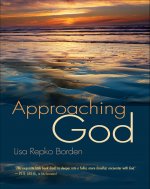
Do I initiate friendship with God? Do I seek new ways to know Him? Do I search Him out in His different persons? My friend Lisa, in her book Approaching God, talks about God as Father, Mother, Healer, Guide… but there are many more. Jehovah-Jireh – the Lord our Provider, to just name one. Do I try to get to know Him in that way? 

Or am I a keeper? Do I keep the friendship going in the ways I am used to, tried and tested? Do I keep communicating, through prayer, reading the Bible, keeping company with other friends of His, studying His words?

I suspect I am, often, neither a maker nor a keeper, to different degrees.

This is a friendship more important than any other. One I need to keep. And to nurture.

Friday, 3 June 2011

Gentle encouragement: Approaching God

I’ve known Lisa Borden for over a quarter of a century.  I know, it sounds old. We’re not really. Well, not that much.  Lisa was a really young bride when I first met her. Now you know how old she and I are, middle-aged in years, young at heart, and spiritually – well, Lisa was always the mature one of the two of us.  This friendship – just one of the many Lisa manages to sustain so thoughtfully – has nourished me beyond words.

I was reflecting recently on how gentle Lisa was, all those years ago when we met with our husbands to study the Bible together. She was so patient with this young Christian who really didn’t know much about the Bible at all and certainly not how to live a like a Christian.

Lisa taught – and continues to teach - me a great deal. Back then she taught me, without many words, just by her kind nature and her lifestyle. And now she teaches many others with her words too. Beautiful words, thoughtful words, insightful words.  In her book,  Approaching God.

Now I know a little more than I did then.  I know the Bible better. I have some idea of how to live like a Christian. Sometimes, I feel I actually achieve it for a moment or two.  And sometimes, I can pass on a little of what I learned from Lisa.

So I’m ordering another copy of her book to give to a friend. A friend who longs to know and serve God better. A friend who, through Lisa’s book, will discover God as father, mother, artist, healer, guide...not just head knowledge of God, but discovering God personally. Because Lisa opens up the way to God through metaphor and imagery, in poetry and prose, in pictures and gentle questioning.

This is a bedside book, a being beside me book, a carefully bagged handbag book, a desktop sojourner book. A dip-in, dive-in, delight-in book.

Approaching God.

And yet more...

Ed Cyzewski, as part of Bonnie's Faith jam on encouragement, suggests that encouragement has to be specific - and that we should encourage before being critical.  I had to be specific, so I had to say what a great idea that was!  However, when I started reading the post, my first thought was that even ‘blanket’ encouragement is DEFINITELY better than none at all. But Ed IS right: encouragement needs to be specific or it doesn’t mean anything.
I think building an atmosphere of encouragement has to be a priority, then varying our responses within that. Sometimes a general ‘thanks’ or even just an ‘I love you’ is enough; sometimes it must be for something particular. We humans just love variety!
Then – and only then – can we offer ‘critique’ or suggestions for perhaps doing things differently. Generally, my ‘better’ is the other ‘different’. I really, REALLY need to remember that.

More encouragement - 8 principles from Celebrate Recovery

I've just read these amazing principles over on Katie's blog:

Eight Recovery Principles of Celebrate Recovery based on the Beatitudes 

  1. Realize I’m not God; I admit that I am powerless to control my tendency to do the wrong thing and my life is unmanageable. "Happy are those who know they are spiritually poor."
    Matthew 5:3
  2. Earnestly believe that God exists,that I matter to Him, and that He has the power to help me recover. "Happy are those who mourn, for they shall be comforted." Matthew 5:4
  3. Consciously choose to commit all my life and will to Christ’s care and control."Happy are the meek." Matthew 5:5
  4. Openly examine and confess my faults to God, to myself and to another person whom I trust. "Happy are the pure in heart." Matthew 5:8
  5. Voluntarily submit to any and all changes God wants to make in my life."Happy are those whose greatest desire is to do what God requires." Matthew 5:6
  6. Evaluate all my relationships; offer forgiveness to those who have hurt me and make amends for harm I’ve done to others when possible, without expecting any reward. "Happy are the merciful" Matthew 5:7 "Happy are the peacemakers"  Matthew 5:9
  7. Reserve a daily time with God for self-examination, Bible reading, and prayer in order to know God and His work for my life and gain the power to do it.
  8. Yield myself to be used by God to bring this good news to others, both by my example and by my words. "Happy are those who are persecuted because they do what God requires." Matthew 5:10

Thursday, 2 June 2011

Feeling invisible...

Bonnie over at Faith Barista has a jam on 'encouragement'. She says 'No matter how old we get or how strong we’ve grown, we can all use encouragement.
We all find ourselves stuck in hard places –
– we wonder if anyone notices.
– we wonder if anyone cares.' 

So yes, I guess I agree that it is at times when I have felt most 'invisible' that encouragement has mattered most to me.
I'm going through a period of invisibility in my workplace at the moment.
I haven't felt encouraged. (Yet. It will happen sometime. Probably - certainly - when I'm not looking for it.)

So it occurred to me, today, just before reading Bonnie's post and all the wonderful comments that followed, that to be encouraged is a little like 'to have a friend, be a friend.' So to be encouraged, I need to actively look for ways of encouraging others. I like to think I do this normally, but when feeling invisible it is just that little bit harder.

So this faith jam has been an encouragement, a prod to get going and encourage others. Great!

Sunday, 29 May 2011

Purify my heart...

Leading prayers at church this evening, I always worry that I will not 'do it properly'.  I don't like to pray specifically for world disasters; nor for other churches; nor even for the sick and bereaved in our own community. I am afraid, sometimes, to name them for fear of forgetting someone important or upsetting someone else if I omit their loved ones.

Today, I jotted a few notes. I focused on the work of Compassion, and on renewing hearts to love God and serve his people.

I prayed, and choked up, touched by the plight of millions of children all over the world. I almost couldn't carry on.

And then, all I could think of was God's people, sitting in churches, hearing His Word. I so desperately wanted them to respond.

Brian Doerksen's song Refiner's Fire sums it up so beautifully:

Wednesday, 25 May 2011

Perfectionism

There’s a Faith Jam going on today over at Bonnie’s blog on perfectionism.

Perfectionism. What an ugly word.
The world worships it.
We Christians must renounce it.

Perfectionism means I must ALWAYS be right, ALWAYS be perfect.
My life must reflect perfection or it loses worth.
My work must be completely fulfilling; my life full of marvellous friends and adoring relations; my home spotless and beautifully decorated and my menus delicious and apparently effortlessly planned; my appearance flawless.

I cannot allow any imperfection, defect or fault to exist in my life.

So career moves must ALWAYS be ideal: if they are not, my life is ruined.
Relational problems are always the other person’s fault, never mine.
Anything not quite up to ‘magazine standard’ in my home is explained away as a temporary glitch as I plan the next home move or redecorating project.
Any flaws in hair, clothes or make-up will be quickly rectified.

I am perfect.

Of course, I won’t say I am. I will excuse any sense of stress or appearance of becoming – oh, ever so slightly of course – uptight with a sweet little smile and the explanation: “I am a perfectionist, you know,” as I flutter my eyelashes in demure modesty.

This is wrong.

Perfectionism DEMANDS perfection. It cannot accept ‘pretty good’ or ‘almost there’ – it must have EVERYTHING. It is all about ME and ignores others. It depletes others of energy, burdening them with the demand that they recognise how wonderful I am – or would be, if circumstances/other people had not ‘done something’ to cause me to be slightly less than completely marvellous.

Perfectionism is an ugly word. We must see it for what it is, and renounce it. Admitting mistakes and failure is the open door to true spiritual growth.

Psalm 51:16-18 (The Message) says
Going through the motions doesn't please you, a flawless performance is nothing to you.
   I learned God-worship when my pride was shattered.
   Heart-shattered lives ready for love don't for a moment escape God's notice. 
Or, in the NIV:
My sacrifice, O God, is a broken spirit; a broken and contrite heart you, God, will not despise.

We need to be broken. We need to fail. We need to make mistakes. We need NOT to be perfect.


PS Attaining perfection is indeed to work towards becoming all we are meant to be, while acknowledging that we are not yet there...we mess up.
Understanding this is complicated, even paradoxical. I should probably have started with the dictionary definition of perfect: complete, not deficient, faultless.  PERFECTIONISM is the UNCOMPROMISING pursuit of excellence: to me, perfectionism does not allow for mistakes.  The repercussions of perfectionism on our relationships with others – family, friends, neighbours, colleagues, God – are countless. I aim to improve, I work towards becoming better, but it is only Jesus who can make me truly perfect. 

A kind friend has sent  this link to John Wesley's sermon on being perfect...

Thursday, 19 May 2011

Truth and lies...


I've been thinking about lying a lot recently.  As a Christian, with many Christian friends, I don't come across lying very much. Generally, my friends speak truth - not just an absence of lies, but truth-inspired wisdom. Wisdom which inspires, illuminates, encourages... But that's another story...

I've jotted down these notes to share at a breakfast I host each month...

Now, lie can mean, as the Oxford English Dictionary says, 'to make a false statement with the intention to deceive'. Lying can often mean much more than that.

I come across lying in my job quite often. While many children tell the truth, it is my experience that others lie almost automatically. They second-guess an answer, and, without time to evaluate the implications for them, 'play safe' by just lying. Along the lines of 'Did you do this?' they will answer 'No,' regardless of whatever 'this' might be. Usually, it only takes the lift of an eyebrow or a simple 'Really?' to get them to change their minds and 'tell the truth'. Usually.  Occasionally, there are individuals who find it very difficult to 'tell the truth' - in fact, 'truth' as they see it may seem far removed from facts and reality.  That's a bit harder, with children, but I usually get there in the end. And it is incredibly satisfying to see a child blossom and develop into a 'truth-teller', emerging from the darkness of hidden lies. 

But lying by adults I find very difficult. Especially when they lie to my face, thinking I don't know the truth. 
I like to believe what people tell me. I like to rely on their words, to take them as true, to depend on them. I trust others to tell me the truth, whoever they are:  friends, colleagues, acquaintances...  Naive, but trusting. I'm learning to take some statements with a 'pinch of salt' and check out the veracity - or otherwise - of the information. And I don't necessarily expect 'truth' from some quarters - double-glazing salesmen perhaps?  But the greater the degree of trust, the greater the betrayal.


It's happened to me recently. I'm growing up. I'm learning to live with it. But my trust has lessened exponentially.

It's not a nice feeling. It's made me even more determined to try to tell the truth as I know it - not as I see it, for there are always different opinions and sides to every question - as much as I can.

There are degrees of lies, of course: many of us say a 'white lie' is fine - said to spare someone's feelings. Or when truth is simply withheld, for the same reason, or because it might be embarrassing, or get someone into trouble, or...And those kind of lies are stories in themselves. Yet I'd like to suggest that even white lies, or withholding the truth, can cause as much harm as telling the obvious whopper. Because lying is a fundamental betrayal of trust. The person lying doesn't trust the person they are speaking to with the truth - and so they hide it. Yet, when the hearer KNOWS the truth, as happened to me recently, it is a huge deal. Ignorance is indeed bliss, for with knowledge of the truth come the piercing arrows of deception, distrust and disloyalty.  Proverbs 25:18 in the New Living Translation says: 
Telling lies about others is as harmful as hitting them with an ax, wounding them with a sword, or shooting them with a sharp arrow. In The Message it is: Anyone who tells lies against the neighbours in court or on the street is a loose cannon.  Psalm 57:4: I am in the midst of lions; I lie among ravenous beasts--men whose teeth are spears and arrows, whose tongues are sharp swords.
Jeremiah 9:8:Their tongue is a deadly arrow; it speaks with deceit. With his mouth each speaks cordially to his neighbor, but in his heart he sets a trap for him.

It’s not ‘nice’!

The last wish of a dying man, reflected in Proverbs 30: 7-9, gives great importance to truth. It says And then he prayed, "God, I'm asking for two things before I die; don't refuse me—Banish lies from my lips and liars from my presence.

Unfortunately, we live in a world of lies, subject to the influence of the Father of lies...so:
1.    How can we live so that we ‘banish lies from our lips’?
2.    How can we deal with those who lie to us?
I think the key to any life question is to memorise what the Bible says: 

1. We must make sure, whatever others do or say, that we speak the truth – for our own sakes. Heed the warnings:
Proverbs 4:23
Keep vigilant watch over your heart; that's where life starts. Don't talk out of both sides of your mouth; avoid careless banter, white lies, and gossip. Keep your eyes straight ahead; ignore all sideshow distractions. Watch your step, and the road will stretch out smooth before you. Look neither right nor left; leave evil in the dust.


Proverbs 6:16
Seven Things God Hates ] Here are six things God hates, and one more that he loathes with a passion: eyes that are arrogant, a tongue that lies, hands that murder the innocent, a heart that hatches evil plots, feet that race down a wicked track, a mouth that lies under oath, a troublemaker in the family.
Proverbs 12:19
Truth lasts; lies are here today, gone tomorrow.
Proverbs 14:5
A true witness never lies; a false witness makes a business of it.
Proverbs 14:25
Souls are saved by truthful witness and betrayed by the spread of lies.
Proverbs 19:9
The person who tells lies gets caught; the person who spreads rumours is ruined.

2.    Make sure, whatever others do or say, that we speak the truth to win them over:
Friends, this world is not your home, so don't make yourselves cozy in it. Don't indulge your ego at the expense of your soul. Live an exemplary life among the natives so that your actions will refute their prejudices. Then they'll be won over to God's side and be there to join in the celebration when he arrives. 1 Peter 2:12 (The Message)

3. Make sure, whatever others do or say, that we do not contribute to a deceptive atmosphere.
As the previous verse says, it's easy to join in and 'indulge' ourselves. 'Sinful desires, which war against your soul' (I Peter 2:11, NIV) are easy to give in to. Exodus 20:16 says: 'No lies about your neighbour'. We may not tell outright lies, but we may pass them on, distort the truth and contribute to rumours and 'whispering in corners'.

So we need to speak the truth for our own sakes, and for others’ good – both individually and corporately.
When we speak straight-forwardly, truthfully and keep away from gossipy discussions – we earn the right to speak THE TRUTH about Jesus into people’s lives.
But that’s another story.